Closing session checks in PAM account

Hello,
I have an Ubuntu on 22.04 LTS using RDM 2025.1.1.5. When this user checks in their last open session (mostly uses SSH sessions) the PAM account is checked in even if the user chooses not to check it in.
All Comments (5)
Hello Kseay1,
Thank you for reaching out to our forum. We’ll be replicating this behavior in our lab shortly to investigate the issue you're experiencing.
We’ll get back to you as soon as possible with our findings.
Best regards,
Michel Audi
Hello Kelly,
I’ve replicated the same scenario using the same Ubuntu and RDM versions, and I wasn’t able to reproduce the issue on my end under the “Show Recently Used Entries” section.
I want to make sure there’s no confusion between PAM check-out and the regular entry check-in/check-out, as these are two separate features.
If possible, please share a few screenshots to help me better understand the behavior you're experiencing.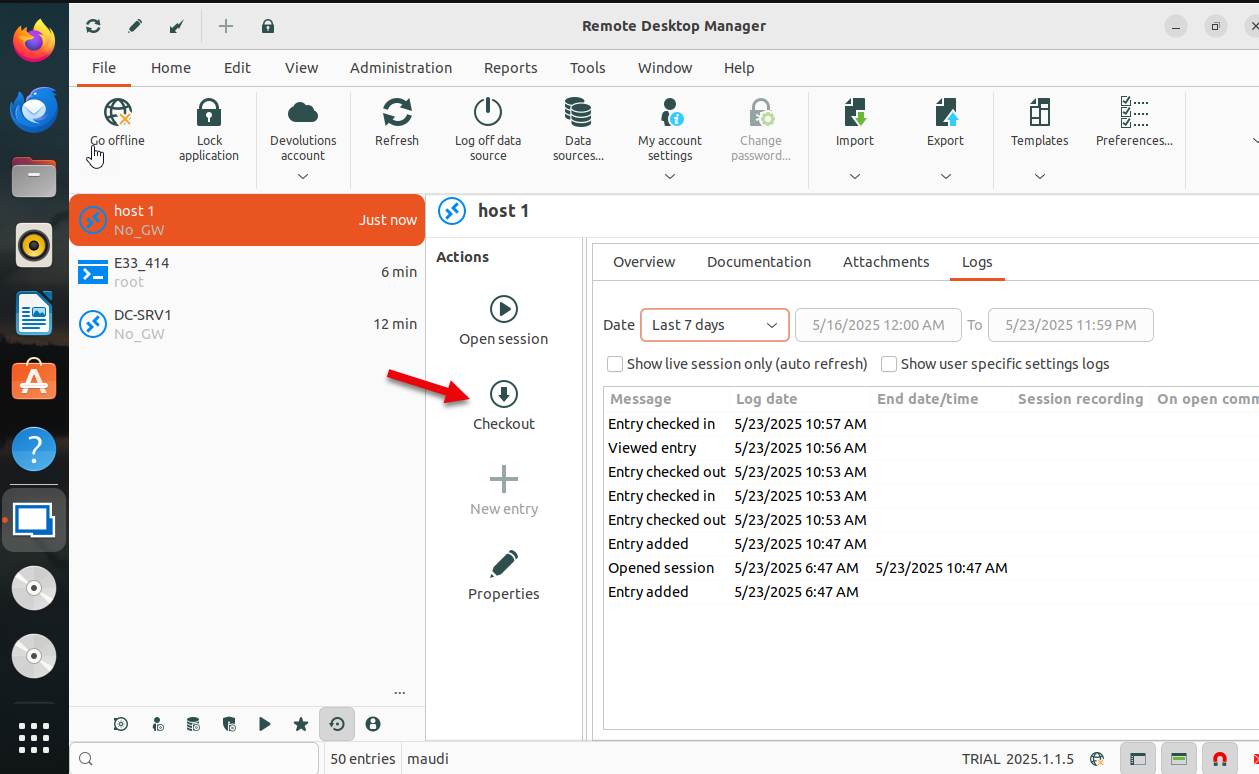
Best regards,
Michel Audi
4cf1d2d0-f331-4243-83a0-5bb78744ebf1.png
Hello Michel,
Here is a screenshot of the log for the PAM domain user. You an see within a few minutes there are multiple checkouts and check-ins as the user was testing. I was standing over the shoulder witnessing that when the last session was closed, the account reverts to a checked in status.
The user did press "No" when asked if wanted to check-in when closing the session. We do have a few other Linux clients running RDM and no one else is having this issue.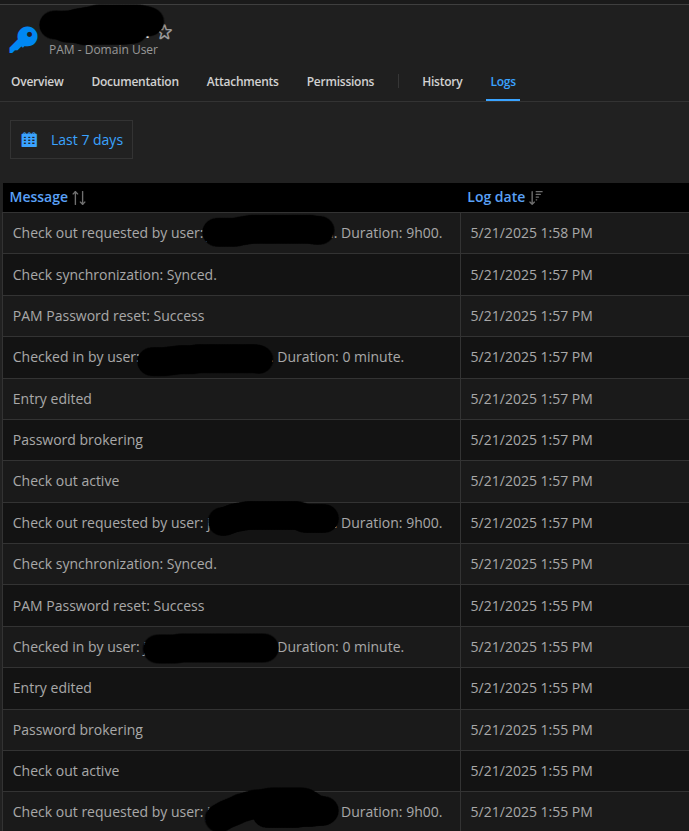
Screenshot From 2025-05-23 08-02-47.png
Hello Kelly,
Thank you for sharing the log. We're still in the process of testing to replicate the exact behavior, but so far we haven't observed the same issue. I’ll reach out as soon as we have any relevant findings to share.
Thank you for your patience.
Best regards,
Michel Audi
Hello Kelly,
I’ve completed the testing and can confirm your scenario this is indeed a bug that occurs specifically when using an SSH PAM account in RDM on Ubuntu 2025.1.1.5 .
I’ll report it to our development team so they can work on a fix.
I’ll keep you updated on any progress.
Best regards,
Michel Audi